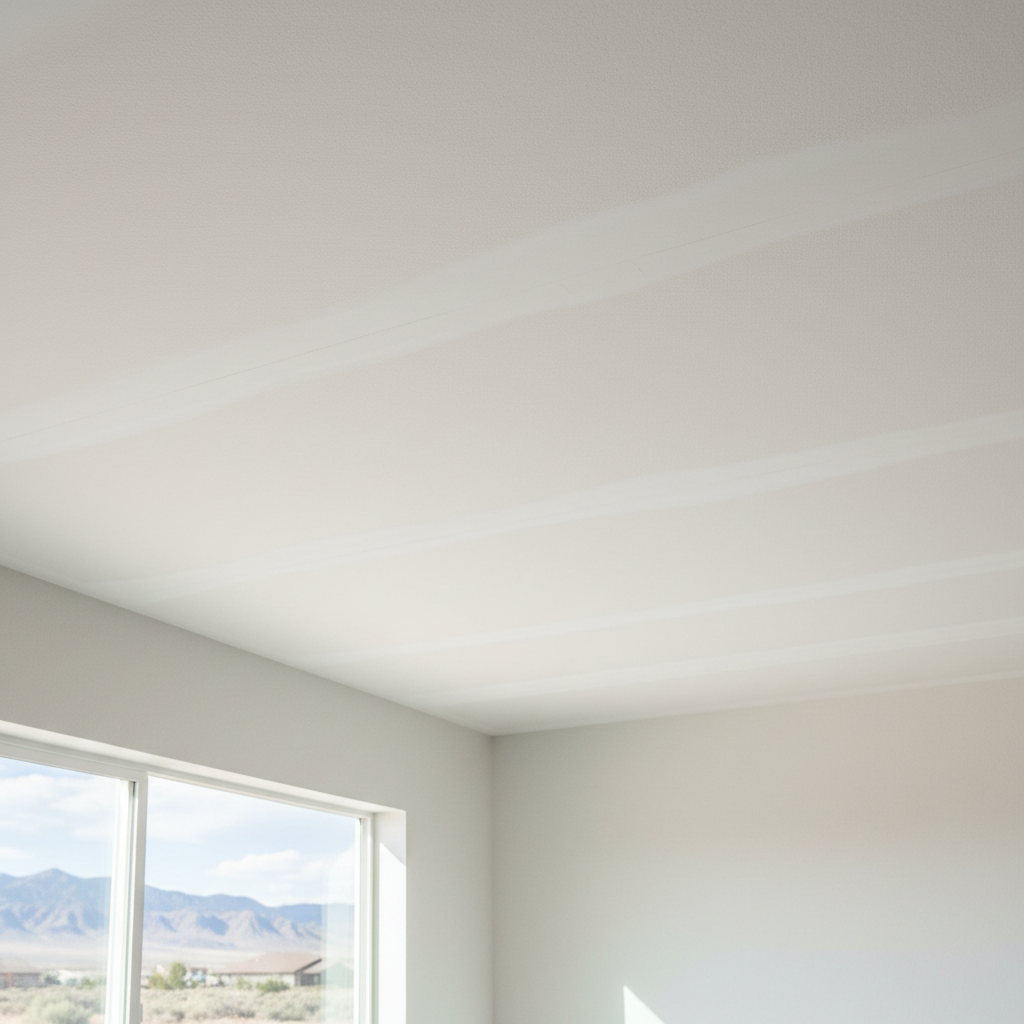
Alright, let's talk about ceiling drywall. I get a lot of questions from folks here in Lehi, especially when they're building new homes or remodeling. Ceilings are a different beast than walls, and there's a lot to consider. I'm going to hit the top 7 questions I hear most often and give you the straight scoop, no fluff.
What's the difference between ceiling drywall and wall drywall? Can't I just use the same stuff?
You know, you can use the same 1/2-inch regular drywall for your ceilings as you do for your walls, especially if your ceiling joists are spaced 16 inches on center. But here's the thing: ceilings are more prone to sagging over time because gravity's always pulling down on them. That's why I often recommend 5/8-inch drywall for ceilings, or at least 1/2-inch sag-resistant drywall. The 5/8-inch stuff is heavier and stiffer, so it holds up better. It's a bit more work to hang, sure, but it makes a big difference in the long run. If you've got joists spaced 24 inches on center, you absolutely need 5/8-inch or a specialized 1/2-inch sag-resistant panel. Don't skimp here; you'll regret it when you see those waves.
How do you prevent cracks in ceiling drywall, especially around here with our shifting soils?
Cracks are a real pain, and yeah, with Lehi's sometimes expansive clay soils, we see a bit more foundation movement than in other places. This can definitely translate to drywall cracks. Preventing them starts with the right installation. First, proper framing is key – everything needs to be solid and level. Second, we use the right fasteners, spaced correctly, to really hold that board tight to the joists. Third, and this is huge for ceilings, we use fiberglass mesh tape on all seams, not paper tape. Mesh tape is stronger and more flexible, so it handles minor structural shifts better. Then, it's about applying enough joint compound and feathering it out properly. Good quality primer and paint also help create a more durable surface. It's a combination of solid materials and careful work.
What's the best way to handle recessed lighting and other ceiling fixtures?
Recessed lights, ceiling fans, smoke detectors – they all need careful attention. When we're hanging the drywall, we measure and mark out where all those fixtures are going to be. For recessed lights, we use a hole saw that's the exact diameter of the light trim. You want a clean, tight cut. For ceiling fans or heavier fixtures, the framing needs reinforcement before the drywall even goes up. We're talking blocking between joists to give the fan box something solid to attach to. If you just screw a fan into a drywall ceiling, it's not gonna end well. It's all about planning ahead and cutting precisely; you can't really patch a bad cut around a light fixture without it looking messy, can you?
How long does ceiling drywall installation usually take for an average room?
That's a tough one to give a precise answer for because every room's different, but I can give you a general idea. For an average 12x12 foot room, just the hanging part of the ceiling drywall might take a day for a couple of guys, especially if it's 5/8-inch board. Then you've got the taping, mudding, and sanding. That's usually three coats of mud, with drying time in between each coat. So, you're looking at a minimum of three to four days just for the finishing work, assuming good drying conditions. If it's a bigger room, or if there are a lot of angles, cutouts, or a specific texture requested, it'll take longer. We're not rushing it; quality takes time, especially on a ceiling where every imperfection is magnified by the light.
Do I need to worry about insulation or soundproofing with new ceiling drywall?
Absolutely, you should think about it, especially if you've got living space above or below. If you're finishing a basement ceiling, adding insulation can help with sound transfer from the main floor. Standard fiberglass batt insulation works well for this. For serious soundproofing, you'd look at things like resilient channels, which decouple the drywall from the joists, or even specialized sound-dampening drywall. These options add to the cost and complexity, but they can make a huge difference in noise reduction. It's way easier and cheaper to put that stuff in before the drywall goes up than to try and add it later. If you're in one of those newer Lehi developments with two-story homes, soundproofing between floors is something I often recommend.
What's the cost difference between DIY and hiring a professional for ceiling drywall?
Look, I'm a contractor, so you know what I'm going to say, but I'll be honest about it. DIYing ceiling drywall can save you on labor costs, which is usually the biggest chunk of the bill. You'll just pay for materials, tools, and your time. But here's the kicker: ceiling drywall is physically demanding and tricky. Lifting those heavy sheets overhead, getting the seams perfect, mudding without drips – it's a skill. If you've never done it, you're going to spend a lot of time, probably make some mistakes, and the finish might not be what you hoped for. Hiring a pro like Allied Drywall Inc means you get experienced guys with the right tools, who can do it faster, safer, and with a much better, smoother finish. We've got the lifts, the stilts, the specialized mud tools. The cost difference is the price of expertise, efficiency, and a headache-free, professional result. Sometimes, trying to save a buck ends up costing you more in frustration and re-dos.
What kind of texture options are there for ceilings, and what's popular in Lehi right now?
You've got a bunch of options for ceiling textures. The most common are knockdown, orange peel, and smooth. A smooth ceiling is classic and clean, but it requires the most meticulous drywall finishing because every tiny imperfection shows. Knockdown is really popular around here; it's got a subtle, slightly textured look that hides minor flaws well. Orange peel is a finer, bumpy texture, kind of like, well, an orange peel. There are also hand textures, like skip trowel, which give a more custom, artisanal look. What's popular shifts, but smooth and knockdown are consistently requested in Lehi homes, especially in those new builds up on the hills. It really comes down to personal preference and the style of your home. We can show you samples so you can get a feel for them. Just remember, a good texture can hide small imperfections, but it can't fix a poorly hung or mudded ceiling.