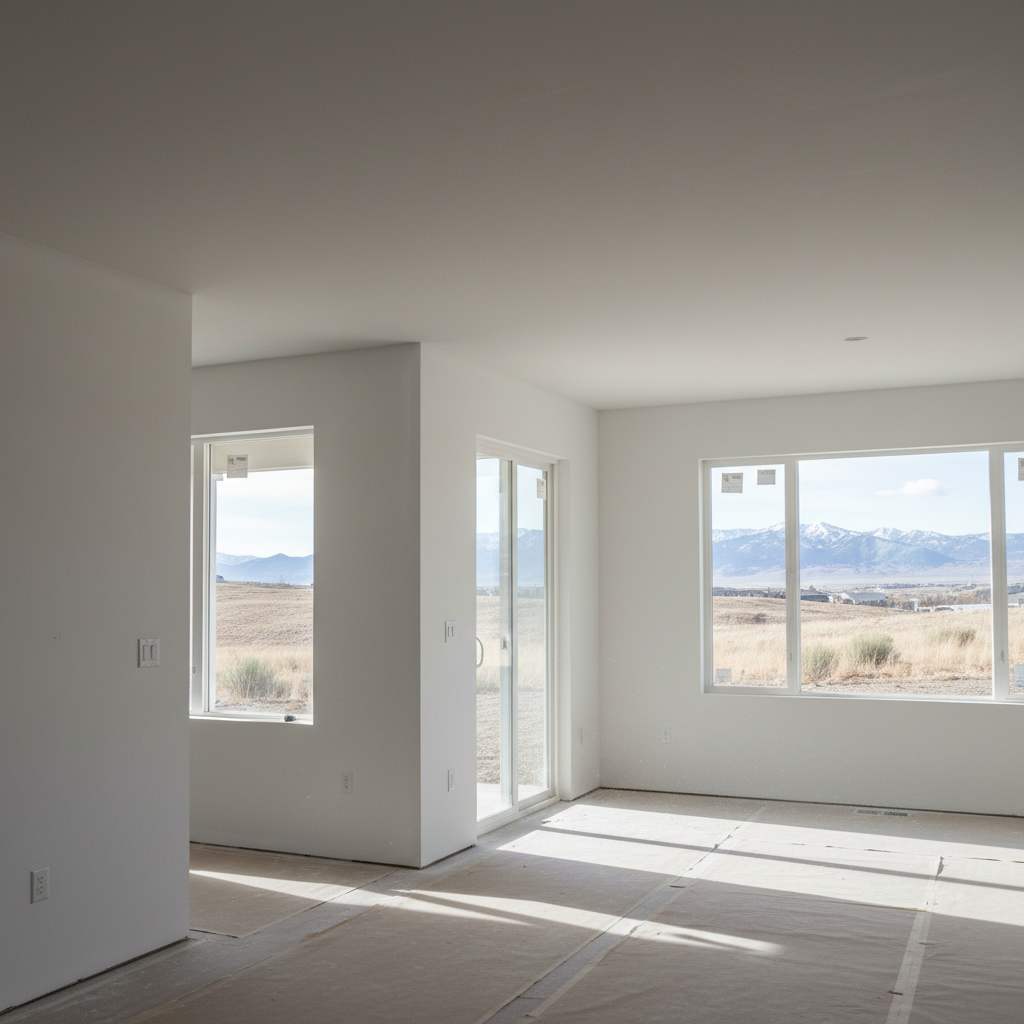
So, you've got new drywall up, or maybe you're just getting ready for a fresh coat of paint. Either way, priming is the next big step. It's not just about slapping on some white stuff, you know; it's a really important part of getting a good finish. But I've seen folks here in Lehi make some truly baffling mistakes when they're planning this stage — or even worse, when they're hiring someone to do it. Let's talk about how to keep your project from going completely off the rails.
Mistake #1: Thinking All Primers Are the Same
This is a huge one. You walk into the hardware store, spot a can that says 'primer,' and think, 'that'll do.' Nope. Not even close. Different primers are made for different jobs. Are you working with new, unpainted drywall? You'll want a good PVA (polyvinyl acetate) primer-sealer. It's designed to seal that porous surface evenly, which stops your topcoat from soaking in unevenly and leaving you with a splotchy mess. If you're painting over stains – maybe water damage from a leaky roof, or even just old crayon marks – you absolutely need a stain-blocking primer. And if you're going from a dark color to a light one, a high-hide primer will save you multiple coats of expensive paint. Using the wrong primer is kind of like trying to use a screwdriver to hammer a nail; it just doesn't work right, and you'll end up frustrated with a poor result.
Mistake #2: Not Asking About Surface Prep
Before any primer goes on, the drywall has to be ready. That means it's clean, dust-free, and all joints and fasteners are properly mudded and sanded smooth. I've seen contractors, especially the cheaper ones, try to cut corners here. They'll prime right over dust, or even worse, over spots that aren't sanded correctly. What happens then? The primer doesn't stick well, and you'll see imperfections right through your final paint job. Dust acts as a barrier, preventing a good bond. Uneven sanding leaves ridges and bumps that primer won't magically hide. When you're talking to a potential contractor, ask them specifically about their surface preparation process. A good one will talk about wiping down walls, checking for imperfections, and making sure everything is smooth. If they just say, 'Oh yeah, we'll prime it,' that's a big red flag.
Mistake #3: Ignoring the Curing Time
Utah's climate, particularly here in Lehi, can be pretty dry, but that doesn't mean you can rush things. Every primer has a recommended drying time and a recoat window. Drying time is when it's dry to the touch; curing time is when it's fully hardened and ready for the next coat. If you prime and then immediately paint, you're not letting the primer do its job. It needs to fully seal and create that uniform surface. Painting too soon can lead to adhesion issues, flashing (uneven sheen), or even blistering down the road. Always check the manufacturer's recommendations on the can. A professional crew, like us at Allied Drywall Inc, knows these times and builds them into the schedule. If a contractor promises to prime and paint your whole house in one day, and it's a decent-sized job, they're probably cutting corners on curing time.
Mistake #4: Not Getting Specific Bids for Priming
Sometimes homeowners just ask for a 'paint job' without breaking down the steps. Priming is a distinct phase, and it has its own costs for labor and materials. I've seen bids where priming is vaguely included, or worse, not mentioned at all. Then, suddenly, there's an 'extra' charge, or they use the cheapest, thinnest primer imaginable to save a buck, which leads right back to Mistake #1. When you're getting quotes, ask for a line item for priming. What kind of primer will they use? How many coats? What's their prep process? This clarity protects you from hidden costs and ensures you're comparing apples to apples when looking at different contractors. It also forces the contractor to think through the process, which is always a good sign.
Mistake #5: Not Checking References or Past Work for Priming Quality
You wouldn't hire someone to build a deck without seeing their previous work, right? The same goes for drywall priming. A bad priming job will absolutely ruin a good paint job. It's the foundation. When you're interviewing contractors, ask to see examples of their finished work, specifically looking at how smooth and uniform the painted surfaces are. Ask for references and call them. Ask those references about the contractor's attention to detail, their cleanliness, and if they stuck to the schedule. You're not just hiring someone to apply paint; you're hiring someone to create a flawless surface. If they can't show you that, keep looking. Especially in newer Lehi neighborhoods, where homes are built quickly, you want to make sure the drywall finish, including the priming, is top-notch before you apply your final colors.
Getting your drywall priming right isn't rocket science, but it does require attention to detail and knowing what questions to ask. Don't let a rushed job or cheap materials mess up your whole project. Do your homework, ask the tough questions, and you'll be much happier with the final result.